
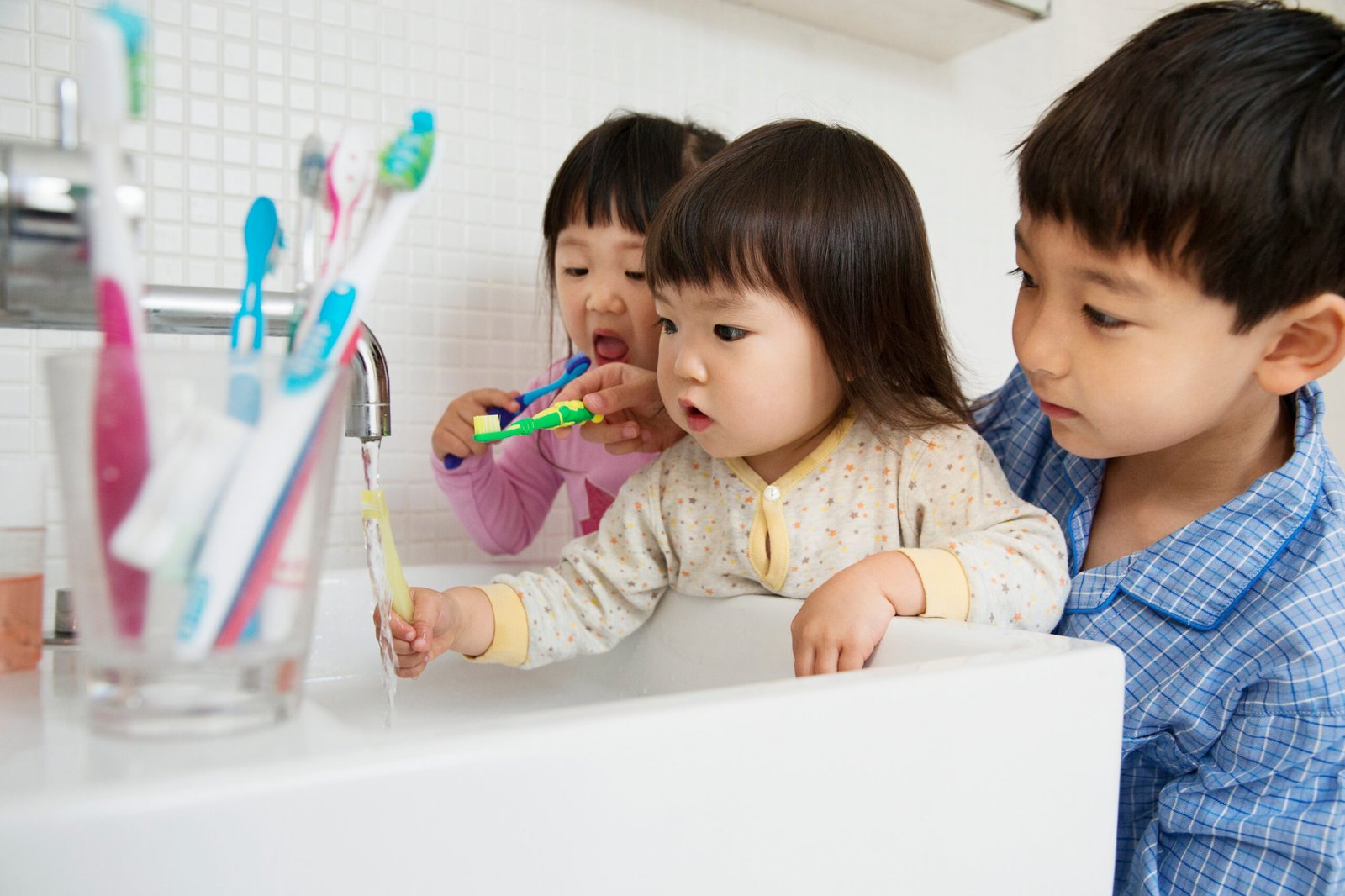
Few parenting questions cause as much second-guessing at the bathroom sink as this one. Your baby has just cut a first tooth, the shelf is full of colourful kids’ toothpastes, and the family tube says “not for children under 6”.
Below, we explain what “regular” toothpaste means, how much to use at each age, and how to choose the best toothpaste for kids, drawing on the same advice we share with parents in our pediatric dentistry appointments.
What Counts as “Regular” Toothpaste?
When parents say regular toothpaste, they usually mean the standard fluoride toothpaste the rest of the family uses. Most of these contain around 1,000 to 1,500 parts per million (ppm) of fluoride.
Children’s toothpastes vary much more. Some contain the same fluoride level as adult toothpaste, just with a milder flavour and fun packaging. Others contain far less fluoride, or none at all. So the real question is not “kids’ tube or adult tube?” but “how much fluoride is in it, and how much am I putting on the brush?”
When Can a Child Use Regular Toothpaste?
From the First Tooth: A Tiny Amount of Fluoride Toothpaste
Dental advice used to suggest brushing with plain water until a child turned 2. Today, most dentists, particularly those working in pediatric dentistry, recommend a small amount of fluoride toothpaste from the very first tooth.
The reason is simple. Baby teeth have thinner enamel and can decay quickly. Fluoride helps strengthen enamel against the acids that cause cavities, so starting early gives those first teeth better protection.
Moving On to the Family Tube
The fluoride level recommended for young children is similar to that of standard toothpaste, so many families use one tube for everyone and simply adjust the amount. If your child dislikes the strong mint taste of adult toothpaste, a milder-flavoured children’s toothpaste with a similar fluoride level is a perfectly good choice.
By around age 6, most children can spit reliably and handle a pea-sized amount on their own. At that point, sharing the family toothpaste becomes even more straightforward.
How Much Toothpaste Should You Use for a Toddler and Young Child?
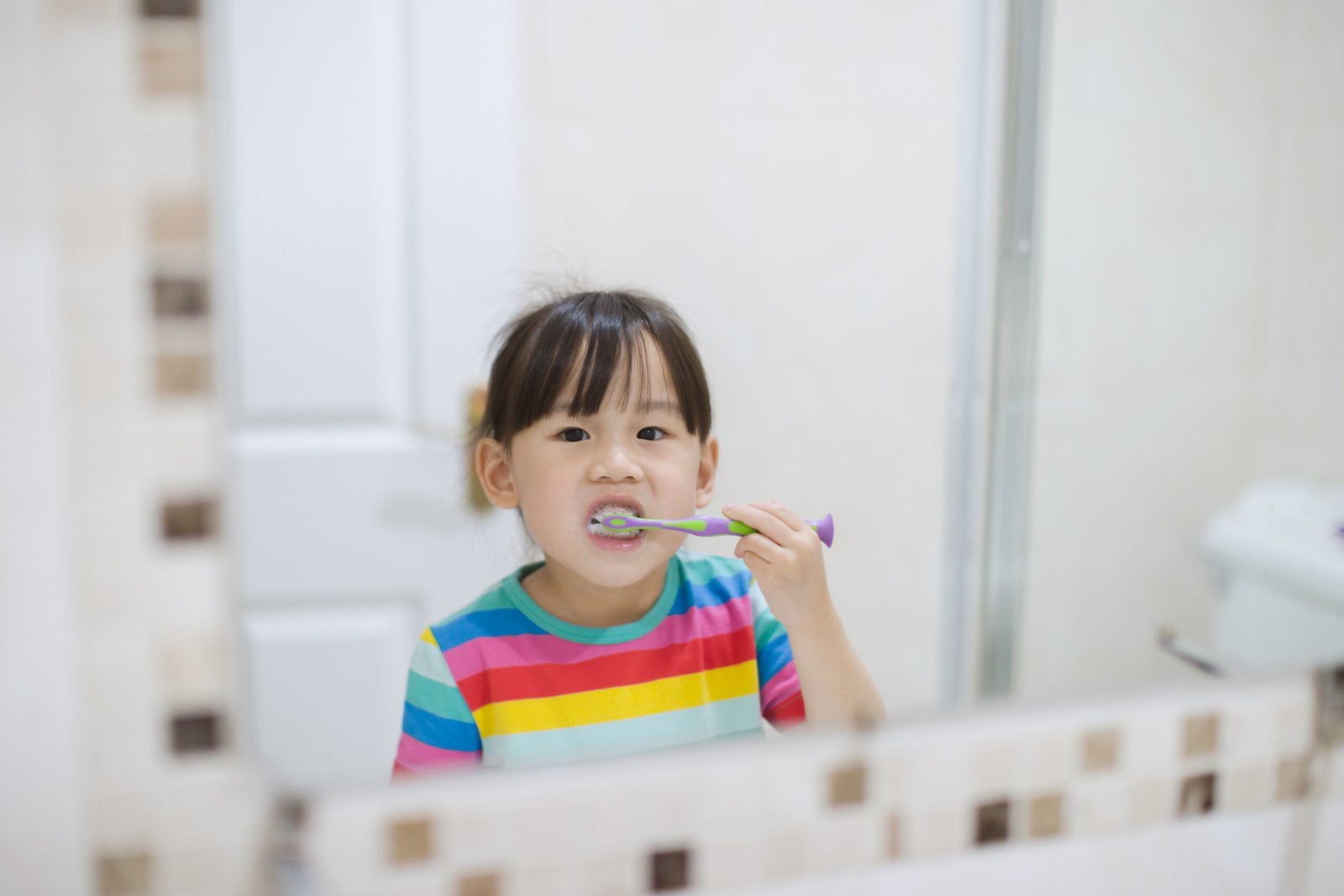
Getting the amount of toothpaste right for a toddler is where most of the safety lies. It is also where many parents go wrong. A full strip across the brush, the way many adults brush, is far more than a young child needs.
Under 3 Years: A Smear the Size of a Rice Grain
For babies and toddlers, use a very thin smear, no bigger than a grain of uncooked rice. It may look like almost nothing, but it is enough to coat small teeth with fluoride. It also keeps the amount swallowed very low, which matters because toddlers can’t spit yet.
Ages 3 to 6: A Pea-Sized Amount
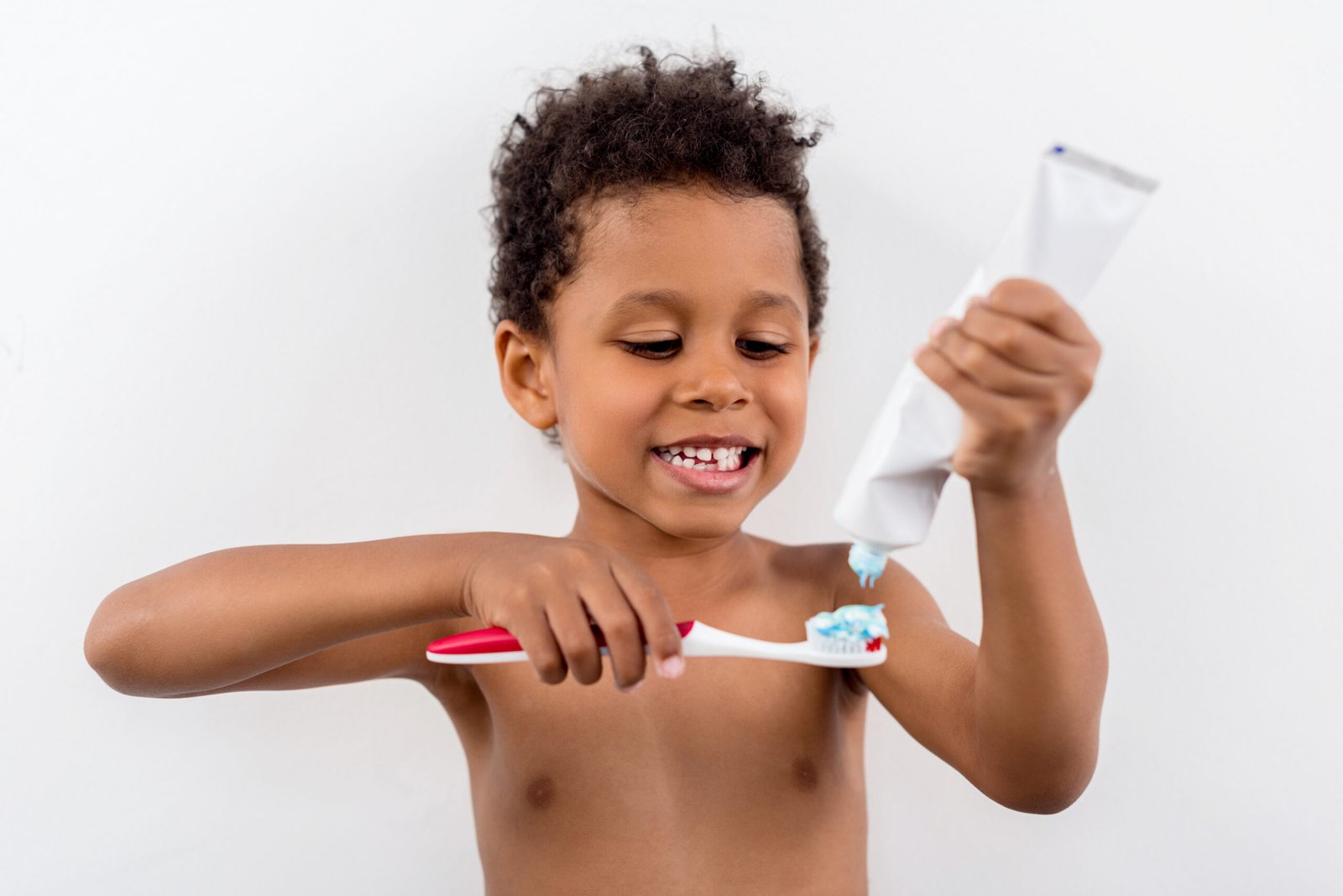
From age 3, you can move up to a pea-sized blob. Children at this age are learning to spit, but they still need a parent to put the toothpaste on the brush and keep an eye on them. Keep the tube out of reach too, as many children enjoy the taste and may try to eat it.
Age 6 and Above
Older children generally continue with a pea-sized amount of standard fluoride toothpaste. Many will brush more independently by now, but they often still need an adult to check that they reach the back teeth and gumline.
Choosing the Best Toothpaste for Kids
Check the Fluoride Content
The best toothpaste for kids is usually the simplest one: a toothpaste with an adequate amount of fluoride. Look for the fluoride concentration on the pack. It is often listed in ppm, or as a percentage of sodium fluoride or sodium monofluorophosphate.
Not every toothpaste on Malaysian shelves states its fluoride level clearly, and some children’s toothpastes contain very little. If you can’t find the concentration on the box, ask your dentist or pharmacist to help you compare options.
Look Beyond Cartoons and Flavours
Characters, glitter and fruity flavours can help a reluctant toddler warm up to brushing, and there’s no harm in that. Just make sure the toothpaste still offers fluoride protection, rather than choosing it purely for the packaging.
Save Whitening and Strong Formulas for Later
Whitening, tartar-control and extra-strength toothpastes are designed for adult teeth. Young children don’t need them, and some formulas can be harsher or unpleasant to taste. Fluoride mouthwash is also generally not recommended for children under 6 unless a dentist advises it, as they are more likely to swallow it.
Is Fluoride Safe for Young Children?
What Dental Fluorosis Is
Parents often worry about fluoride because of dental fluorosis. Fluorosis is a change in the appearance of tooth enamel, usually faint white lines or flecks. It can happen when a child regularly takes in too much fluoride while their permanent teeth are still forming under the gums. In most cases it is mild and purely cosmetic.
This is exactly why the recommended amounts are so small. A rice-grain smear or a pea-sized amount keeps fluoride intake low while still helping to protect against decay. Tap water in Malaysia also contains a low level of fluoride, so there’s usually no need to add extra fluoride products unless your dentist recommends them.
Easy Ways to Limit Swallowing
Squeeze the toothpaste yourself rather than handing over the tube. Teach your child to spit once they’re old enough, and make a little game of it. Store toothpaste where small hands can’t reach it. If your child occasionally swallows a small smear, that’s generally not a cause for concern. If you suspect they’ve eaten a large amount, speak to your dentist or doctor.
Brushing Tips for Toddlers and Young Kids
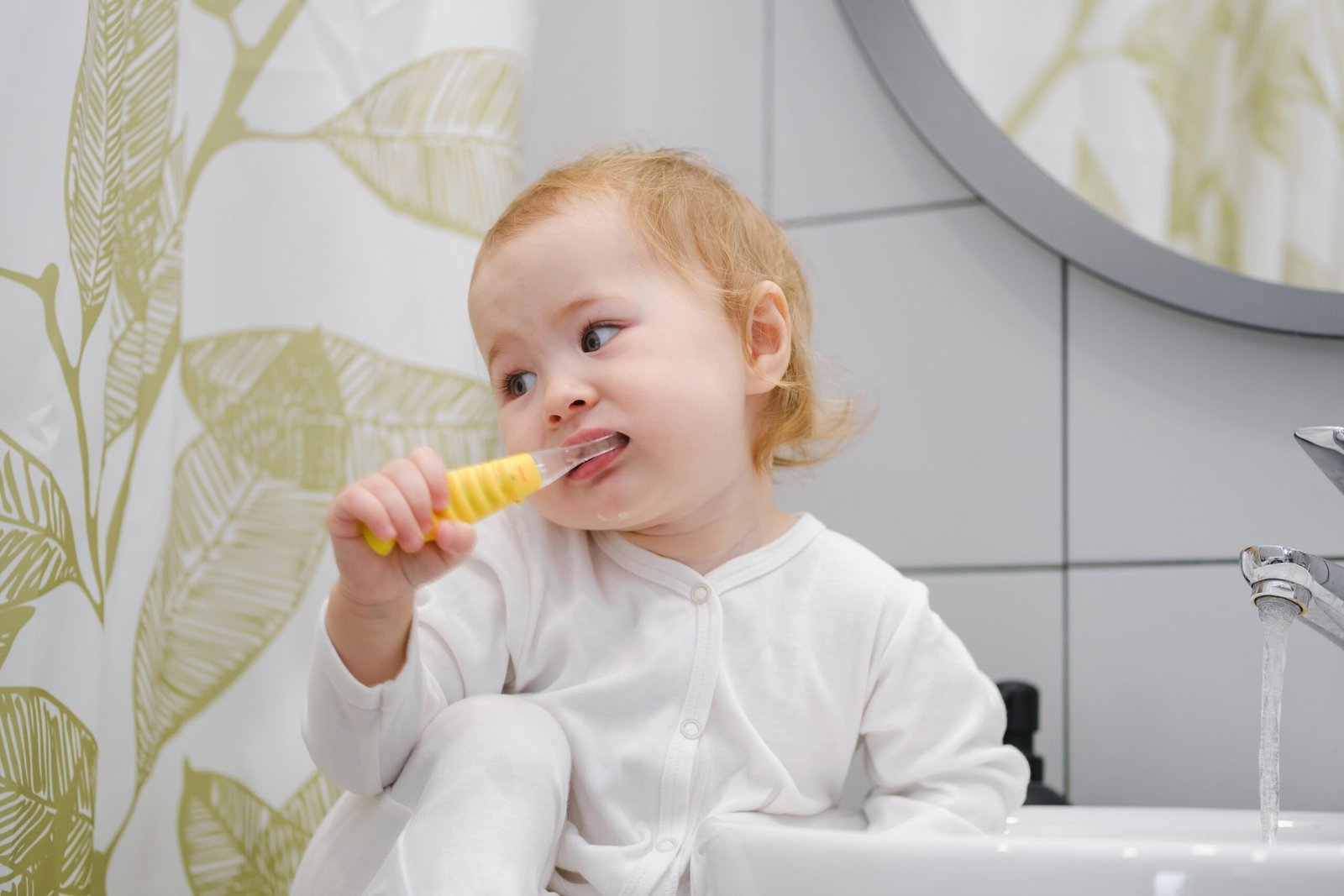
Brush for Them, Then With Them
Young children don’t yet have the hand control to brush thoroughly. Until they can do a good job on their own, often around age 7 or 8, an adult should brush for them or finish off after them. Use a soft, small-headed toothbrush made for their age.
Twice a Day, With Night-Time as the Priority
Brush in the morning and last thing before bed. Night-time brushing matters most, because saliva flow slows during sleep and teeth have less natural protection. Try to avoid milk or sweet drinks after the night-time brush.